
Kitchen and rear extension rubber roofs
Covering a ready 20 to 35 m² rear extension deck runs €2,500 to €4,800. Stripping aged felt and upgrading to a Part L warm rubber roof with rigid PIR insulation typically totals €4,500 to €9,000.
Weatherproofing heated rear returns, utility rooms and wrap-around extensions to Irish Part L warm-roof standards.
Free, no obligation. One local roofer prices it, not five.
- €2,500–€6,50020–35 m² extension re-roof
- €130–€190/m²full warm-roof strip + PIR
- 0.20 W/m²KPart L flat-roof backstop
- 2 to 3 daystypical extension schedule
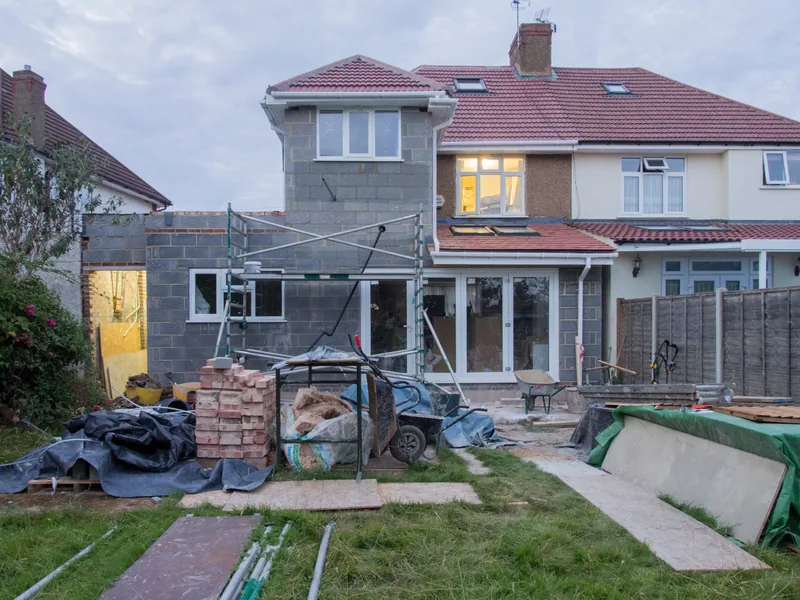
Why heated kitchen extensions need a warm-roof build-up
Steam from cooking, tumble dryers and radiators rises straight toward the flat roof of a rear kitchen extension. When insulation sits stuffed between the rafters in an older unvented cold roof, warm indoor vapour hits the freezing underside of the deck boards in January and condenses into dripping water that homeowners often mistake for a membrane leak.
- Structural 18 mm OSB3 or plywood deck. Firmly screwed to sound joists with any sag corrected by tapered firring strips.
- Air-and-vapour control layer (AVCL). A continuous sealed vapour barrier stops kitchen steam rising into the insulation zone.
- Rigid foil- or tissue-faced PIR boards (120–150 mm). Placing all insulation above the deck keeps structural timbers warm and dry year round.
- Bonded rubber membrane or reinforced liquid finish. Glued directly to tissue-faced PIR insulation (or over a top OSB carrier board) and dressed up every parapet and rooflight kerb.
Price my rubber roof
Four taps show our Irish price guide before we ask for a phone number. One local roofer rings you, not five.
An extension rubber roof, 21 to 40 m², replacing old felt: €3,200 to €6,500, supplied and fitted.
How this roof guide is worked out
The range reflects typical Irish supply-and-fit rubber roofing rates (13.5% residential VAT) for that structure, footprint and existing surface. Bare timber figures cover rubber membrane or liquid coating, adhesives, perimeter drip trims and labour on a sound OSB3 or plywood deck. Choosing old leaking felt adds an allowance for stripping, disposal and localised deck prep. Full rotten board replacement (€30 to €60/m²), Part L warm-roof PIR insulation (€40 to €80/m²) and upper-floor scaffolding are confirmed after a local roofer inspects the roof.
Detailing roof lanterns, skylights and house-wall abutments
Modern Irish rear extensions rarely have an empty rectangle of flat roof; most incorporate glazed roof lanterns, flat glass rooflights, soil vent stacks and tall masonry abutments against the original rear wall. Every upstand around a skylight kerb must stand at least 150 mm above the finished roof surface so driving rain and winter sleet cannot splash over the timber curb.
Rooflight or lantern kerb
- Typical extra allowance
- €250 to €650
- Detail to verify
- 150 mm minimum upstand height with folded corner patches or liquid bandage
Rear house wall abutment
- Typical extra allowance
- €300 to €800
- Detail to verify
- Code 4 lead stepped or cover flashing chased 25 mm into mortar
Internal box gutter or outlet
- Typical extra allowance
- €250 to €700
- Detail to verify
- Leaf guard cage and wide-bore outlet pipe to stop overflow
Tapered PIR fall upgrade
- Typical extra allowance
- €15 to €30/m² extra
- Detail to verify
- Creates a positive 1:80 finished slope on dead-flat legacy joists
Related flat-roof guides

Questions homeowners ask
How much does a 25 m² kitchen extension rubber roof cost in Ireland?
A straightforward re-cover onto a sound deck sits around €2,500 to €4,200. A full strip, new deck, vapour barrier, 150 mm PIR warm-roof insulation and rubber finish runs €3,500 to €5,200 to €6,000+ depending on rooflights and access.
Do I legally have to insulate my extension roof when replacing the felt?
Yes. Under Irish Building Regulations Part L, re-waterproofing more than 25% of a heated dwelling's flat roof triggers a thermal upgrade toward 0.20 W/m²K.
Will adding 150 mm of PIR insulation block my upstairs bedroom windowsills?
Always measure from the existing flat roof deck up to the underside of first-floor window cills before choosing insulation thickness. Where clearance is tight, tapered PIR boards or high-performance vacuum/phenolic boards keep the flashing line below the cill.
Can my kitchen stay usable while the flat roof is replaced?
Yes. Experienced flat roofers strip and make watertight in sections or schedule full stripping strictly on a dry forecast day, keeping temporary tarps on hand until the vapour barrier is sealed.
All rubber roofing pages and guides
Domestic flat roofs
Homeowner guides
Price your kitchen or rear extension roof
Tap extension footprint and existing felt or timber surface, then let a single flat roofer in your county confirm insulation height and flashing.